Edinburgh Travel Guide, Ireland Travel Tips and Weekend Getaways from the UK

The Ultimate Guide to Ring of Kerry Day Tours from Killarney: Local Tips for Choosing the Best Route, Stops, and Tour Style

Kerry Cliffs - a must visit spot on Ring of Kerry tour

Hi there, fellow Ireland traveler! If you are planning a Ring of Kerry day tour from Killarney, you have probably noticed that the options seem almost identical at first: similar routes, prices, and photos. 

This guide is here to help you sort through the choices and pick a tour that truly stands out.

I have lived in County Kerry, and the Ring of Kerry is practically my backyard. I have tried the classic tour, the upgraded version with Kerry Cliffs and the Skellig Ring, and I know this coastline well enough to say that the differences between tours really matter.

In April 2026, I went back and did the full extended route again, this time to give you an honest, detailed recommendation.

Here are my three quick tips before you book:
 
  • Compare routes, not just prices. A cheaper tour might skip the stops that make the day genuinely memorable. If seeing dramatic cliff scenery is on your list, choose a tour that includes Kerry Cliffs — you will not need to add a separate trip to the Cliffs of Moher, and honestly, Kerry Cliffs will likely impress you more.
  • Plan for a full day. The Ring of Kerry is not a quick scenic loop. It is a long, beautiful day with changing landscapes, plenty of stops, and a lot of information coming your way. Arrive rested and leave the evening free.

  • Don’t try to see everything in one day. Killarney National Park deserves a full day on its own. During a Ring of Kerry tour, you will pass through or near it, but you won’t have time to really explore it. Save it for the next morning and give yourself time to enjoy the Ring.

Table of Contents

What is the Ring of Kerry, and how long does it take to drive?

The classic Ring of Kerry route is around 179 km (111 miles) and traditionally starts and ends in Killarney, passing through Killorglin, Glenbeigh, Cahersiveen, Waterville, Sneem, and Kenmare.
 
While it takes roughly 3 to 3.5 hours to drive continuously, be ready to spend a full day making stops and enjoying the area’s beauty.
 
But here is the thing: not every Ring of Kerry day tour is the same.
 
Some tours follow the classic coach route. Some include the Skellig Ring. Some stop at the Kerry Cliffs. Some focus more on villages, photo stops and local stories. And some, honestly, try to squeeze in a little too much.
 
I have lived in this area for more than 2 years and have done the Ring of Kerry tour as a guided tour, a private car tour, and a public transport tour. 

I recently did a wonderful Ring of Kerry tour myself, and I came away with one very strong opinion: if you can, choose a tour that includes the Kerry Cliffs.

Why? More on that soon.

Why Start Your Ring of Kerry Day Tour from Killarney?

Advantages of Killarney as a Base
Killarney is more than just a convenient starting point. It is truly one of the best places to base yourself when exploring southwest Ireland.
 
Almost everything worth seeing in County Kerry is close by, and the best part is that you do not need a car to reach any of it.
 
The Ring of Kerry loop traditionally starts and ends right here, which means tour pickups are plentiful, well-organised, and easy to book.
 
 
But the Ring of Kerry is just one reason to use Killarney as your base. From here:
 
  • You can spend a full day exploring the Dingle Peninsula – one of Ireland’s most dramatic and unspoiled coastlines.
  • Killarney National Park and the famous Gap of Dunloe are both on your doorstep, and both deserve a dedicated day of their own rather than a rushed stop between other sights.
  • In the evenings, Killarney comes alive. The town has a strong pub culture, plenty of good restaurants, and a warm, sociable atmosphere where it is easy to meet other travellers.

 
It is a true tourist town, which is part of its charm but also its main drawback.

Getting to Killarney

Killarney is easier to reach than many people expect. Direct trains run from Dublin and Cork, so you can get there by train from most major Irish cities.
 
If you are flying into Shannon Airport, there are bus connections to Killarney, though you will need to change buses.
 
Kerry Airport is just 15 to 20 minutes away by taxi or transfer and offers seasonal flights from several UK and European cities. It is a good option if you want to minimise travel time.
 
A dedicated guide to getting to Killarney, including the best transport options from each main arrival point, is in the works. I will link it here once it is live.

Must-See Stops on the Ring of Kerry (with Local Insights)

Ladies View and Moll’s Gap

Ladies View is one of the most photographed viewpoints on the Ring of Kerry route
Ladies View is one of the most photographed viewpoints on the route, and for good reason.
 
It offers a sweeping panorama over the Killarney Lakes and the MacGillycuddy’s Reeks mountains, the kind of view that makes people stop talking just to take it in.
 
We made a quick photo stop here, slightly away from the official viewpoint, and honestly, the whole area is so open and dramatic that it is hard to take a bad shot.
 
The name comes from Queen Victoria’s ladies-in-waiting, who reportedly admired the view during a royal visit in 1861 — and it has been turning heads ever since.
 
Worth knowing: this stretch of road sits well outside any public transport routes, so it is only accessible by tour bus or car (hiking, bicycling is also possible). If you are on a guided tour, your driver will stop here, just make sure your camera is ready before you step off.

Waterville, Caherdaniel, and Sneem

Sneem

Sneem is one of those villages that makes you wish the tour schedule allowed for more time.

It is small, colourful, and genuinely charming—the kind of place where you want to wander slowly instead of just checking it off your list. We arrived at the same time as a couple of other tour buses, which made it a bit busier for a short while, but it soon quieted down, and the atmosphere remained pleasant.

Waterville

Waterville was our lunch stop, and it delivered. We ate at The Lobster pub, which is popular with both locals and visitors — and for good reason.
 
I ordered the seafood pie, and it was the real thing: generous with the seafood, full of flavour, and exactly what you want after a morning of fresh Atlantic air. 
Seafood pie for a lunch in Lobster pub, Waterville
If you like to make the most of every moment, consider packing a sandwich and using your lunch break to explore
 
Waterville rather than sitting down for a full meal. It is a beautiful seaside village with a lovely stretch of coastline, perfect for a short walk and some photos.
 
There is also a Centra shop nearby if you need a quick and easy lunch option.
Charlie Chaplin statue in Waterville, what has become a local landmark.
And yes, Charlie Chaplin. Waterville was his favourite holiday destination, and he returned year after year with his family.
 
There is a statue of him on the seafront that has become a local landmark. It is a small but lovely detail that adds another layer to what is already a very special place.

Caherdaniel

Caherdaniel sits right between Waterville and Sneem, just 150 metres off the main road — so it is hardly a detour at all.
 
If you are travelling by rental car or on a private tour, it is an easy and very rewarding stop.
 
The village is tiny and quiet, and The Blind Piper pub is genuinely one of the best spots in the area for a meal.
 
I have eaten there more than once, including at the end of a long day hiking the Kerry Way from Waterville and it has never disappointed.
 
The food is excellent, the outdoor terrace is lovely on a fine day, and the atmosphere is exactly what a good Irish pub should feel like. It is the kind of place that even a nearby golf club brings its guests to, which tells you something.
 
If the main stops in Sneem and Waterville feel a little crowded when the tour buses arrive, Caherdaniel is a quieter and equally rewarding alternative for those with the flexibility to choose.

Kerry Cliffs

The Underrated Highlight
If you are asking me what the highlight of the tour was, it was the Kerry Cliffs.
 
The cliffs have a raw, wide-open quality that feels very different from the more famous coastal viewpoints in Ireland.
 
They are dramatic but not manicured, and almost always less crowded. On a clear day, you get unobstructed views of the Skellig Islands rising from the Atlantic, and that alone is worth the entrance fee.
 
Read more on exactly why this stop is worth prioritising and how to make the most of your time there.

If I were booking a Ring of Kerry day tour from Killarney, I’d look for one that includes the classic route, the Kerry Cliffs, and the Skellig Ring. It gives you a much richer day than a standard scenic drive — with dramatic cliffs, Atlantic views, and some of the most memorable stops along the route.

See the tour I recommend →

Skellig Ring & chocolate factory

The Skellig Ring is where the Ring of Kerry tour shifts into a different gear entirely. While the main route follows the N70 and keeps a steady pace, the Skellig Ring turns toward the Atlantic on narrower, quieter roads.
 
The landscape changes almost immediately. There is a sense of remoteness here that is hard to describe, but it truly feels like the edge of Europe.
 
The Atlantic stretches out in every direction, the roads are barely wide enough for two cars, and the Skellig Islands appear on the horizon like something from another world.
 
Our first major stop after the Kerry Cliffs was a 360-degree viewpoint that stopped everyone in their tracks.
 
From one spot, you could see the Atlantic Ocean, Skellig Michael, Valentia Island, and the surrounding farmland and hills all at once.
 
It is the kind of panorama that makes you put your phone down for a moment and just look.
Tasting stop at Skelligs chocolate factory
We then stopped at the Skelligs Chocolate factory and if you have any fondness for good chocolate, this is a highlight in itself.
 
The tasting was included, and the flavours are genuinely inventive. In winter, you might find Irish Coffee or Hot Toddy with Chilli; in summer, Lemon Truffle, White Chocolate, or Strawberries and Champagne.
 
It is a wonderfully unexpected stop in the middle of one of Ireland’s most dramatic landscapes.

The honest bottom line: many people book the Ring of Kerry expecting the main route to be the highlight. For a lot of them, the Skellig Ring ends up stealing the day.

Kenmare

and Return Options
Kenmare - one of the most beautiful small towns in County Kerry
Kenmare does not appear on every Ring of Kerry tour itinerary, and our tour did not stop there either, but it deserves a mention, because it is one of the most beautiful small towns in County Kerry and a natural point on the return leg toward Killarney.
 
If you are travelling by rental car or on a private tour, even a short stop in Kenmare is worth including. It is an elegant, relaxed town with good restaurants, independent shops, and a real sense of place that feels far from the busier tourist hubs.
 
It is also one of my personal favourite spots in Kerry, and I often return there on my days off.

Torc Waterfall

The Perfect End to the Day
Torc Waterfall in Killarney National Park, the waterfall feels almost impossibly green and quiet after the drama of the coastline
After a day of open Atlantic horizons and sweeping coastal views, Torc Waterfall offers something completely different.
 
That contrast is exactly what makes it such a great final stop.
 
The walk from the car park takes only a few minutes, and suddenly you are standing in front of a cascading, mossy, otherworldly scene that appears more like a fairy tale than a tourist attraction.
 
It is free to visit, accessible, and genuinely beautiful.
 
We stopped here at the end of our tour, and it was the right call. After a long day of big landscapes and open skies, there is something extremely calming about feeling surrounded by trees and the sound of rushing water. It is the kind of ending that remains with you.
 
If your tour includes this stop, do not skip it — even if your feet are tired.

Killarney National Park & Muckross House
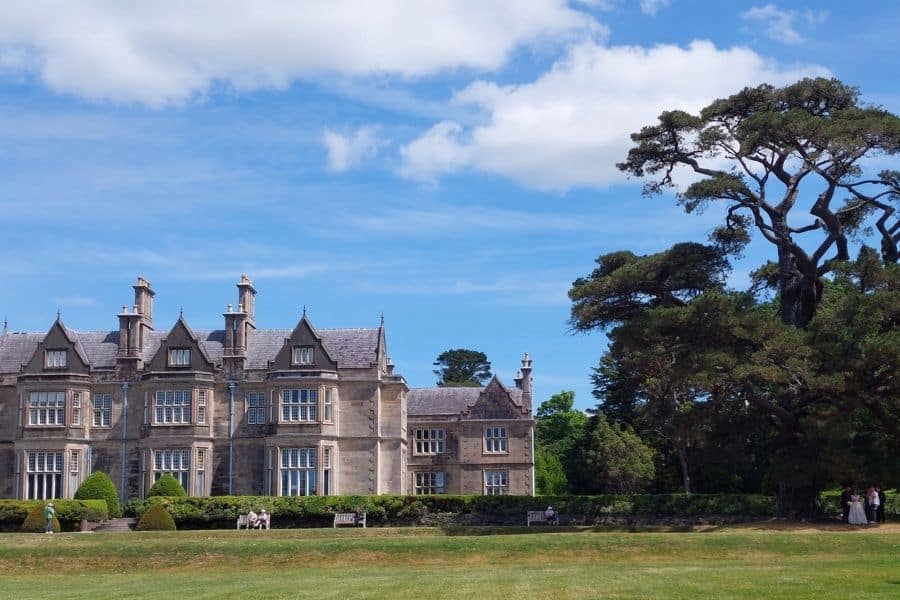
Killarney National Park is one of Ireland’s most visited natural areas, and it sits right on the doorstep of the town.
 
On the Ring of Kerry tour, you will pass through or alongside it rather than explore it properly. Our guide pointed out landmarks and shared some history along the way, which gave a lovely sense of context, but there simply is not enough time to do it justice within a full-day tour.
 
Muckross House, the Victorian mansion at the heart of the park, is worth a visit in its own right, as are the lake shores, the ancient woodland, the resident red deer, and the famous jaunting cars that have been carrying visitors through the park for generations.

My advice: treat Killarney National Park as a separate day, not just an add-on. It is best enjoyed at a slower pace, and there is much more to see and do than most people expect, including options for those travelling without a car.

Choosing the Best Route: Classic vs Alternative Ring of Kerry Circuits

Clockwise vs Counterclockwise Explained

Counterclockwise

Almost every organised group tour drives the Ring of Kerry counterclockwise, and there is a practical reason for this. The roads along the route are narrow in places, and when large coaches travel in the same direction, traffic flows more smoothly.
 
Most operators have quietly agreed on this approach over the years, and it works well.
 
Our tour followed the same direction, with the first stop at Kerry Bog Village in Glenbeigh. This charming open-air museum sets the scene nicely before the landscape becomes truly dramatic.
 
There is also a pub on site where you can grab a morning coffee or, if you are feeling especially Irish, an Irish Coffee. Since tours usually leave early, this is a very welcome first stop and means you do not have to worry about getting your caffeine fix before leaving Killarney.


Clockwise

If you are driving yourself or on a private tour, going clockwise is worth considering.
 
You will avoid sitting behind a line of coaches at the popular stops, and the experience feels much more relaxed.
 
The trade-off is that some stops require a bit more navigation and local knowledge to find at the right time, so make sure to do your research before you set off.

Hidden Gems and Less-Traveled Detours

The classic Ring of Kerry route is beautiful, but the most memorable moments often happen when a tour ventures slightly off the main road.
 
The Skellig Ring is the best example of this.
 
Where the main route stays on the N70 and keeps moving, the Skellig Ring peels away toward the Atlantic — taking you through narrower roads, wilder landscapes and that particular feeling of being genuinely far from anywhere.
 
It loops past Kerry Cliffs, through Portmagee, and offers views of the Skellig Islands rising out of the ocean on a clear day.
 
For most people who do it, it stops being a detour and becomes the highlight.
 
The important thing to know is that this area is almost impossible to reach without your own transport or a tour that specifically includes it. There is no practical public transport connection, and if you tried to get to Kerry Cliffs on your own and back in a single day, it would be difficult.
 
If the Skellig Ring and Kerry Cliffs are on your list – and I strongly recommend they should be – make sure your tour clearly includes them before you book.

If the Skellig Ring and Kerry Cliffs are on your list - and I strongly recommend they should be - make sure your tour clearly includes them before you book.

The Kerry Cliffs: Why They’re the Ultimate Stop on Your Ring of Kerry Day Tour?

What Makes the Kerry Cliffs Special?​
Impressive view of Kerry Cliffs, Ireland

Practical Tips for Visiting (Timing, Photos, Accessibility)

There are plenty of scenic stops on the Ring of Kerry, but the Kerry Cliffs are in a different category.
 
I say this as someone who has spent years living on this coastline and has seen it in every season and every mood.
 
What sets them apart remains the combination of scale, wildness, and accessibility.
 
You are standing by the edge of Europe, looking out over open Atlantic water toward the Skellig Islands, with nothing between you and the horizon.

Good to know:

  • Entry costs 5-6€
  • The site is open daily from 9:30 AM to 6:30 PM, with last entry at 6:00 PM. In stormy weather, some of the higher or more exposed viewing points may be closed for safety reasons — so if you are visiting in autumn or winter, it is worth checking conditions before you go.
  • The viewing area is not just one spot. It is a series of platforms and paths that take you from one vantage point to another, each offering a slightly different view of the cliffs and the ocean.
  • That variety is part of what makes it so rewarding. Some sections have short but fairly steep climbs, which might be challenging if you have mobility difficulties. However, lower viewpoints are easier to reach and still offer beautiful views, so do not let the steeper paths discourage you.
  • Set aside at least an hour, ideally an hour and a half. The walk from the car park to the first viewing area takes around ten minutes, and once you are there, you will want time to move between the different spots without rushing.
  • The light and clouds shift constantly here, so if the view is partially obscured when you arrive, wait a few minutes — it is often worth it.
  • On clear days, you will see the Skellig Islands on the horizon — and they are worth knowing a little about, because they are extraordinary.
    • Skellig Michael, the larger of the two, is a UNESCO World Heritage Site and home to one of the most remarkable early Christian monasteries. Perched on a rocky island rising 218 metres out of the Atlantic, it was built by monks in the 6th century and remained inhabited for centuries. It is also recognisable to many visitors as a filming location for Star Wars.
    • Little Skellig, the smaller island nearby, is one of the largest gannet colonies in the world, with around 70,000 birds.

Kerry Cliffs or Cliffs of Moher?

The Kerry Cliffs are also, and this is important, far less crowded than the Cliffs of Moher
 
You arrive, walk to the edge, and simply take it all in. That kind of experience is becoming rare.
 
Are they objectively better than the Cliffs of Moher? That depends on what you are looking for. The Cliffs of Moher have scale, drama, and a well-earned reputation.
 
But if you want a clifftop experience that feels personal, unhurried, and truly wild, the Kerry Cliffs will probably leave a stronger impression.
 
For me, they were the single most powerful moment of the entire day.

How to Ensure Your Tour Includes the Kerry Cliffs

This is the practical part, and it matters: not every Ring of Kerry tour includes the Kerry Cliffs.
 
Many follow the classic N70 route, which skips the Skellig Ring entirely.
 
If the Kerry Cliffs are a priority for you, I recommend that tour:
Powered by GetYourGuide

Choosing the Right Tour Style for Your Interests and Budget

Guided Coach Tours

The most common way to do the Ring of Kerry is on a group coach tour, which typically runs with large buses carrying 40 to 50 passengers. They are affordable and well-organised, but the experience is naturally more structured and less flexible.
 
More operators now offer the same route with smaller minibuses, usually carrying around 16-22 passengers. These tours cost a bit more, but the atmosphere is noticeably different.
 
Having worked as a tour guide myself, I know that a group of up to 20 people lets a guide connect with everyone on board.

But the coach tours cost less and running mostly 

Small-Group Guided Tours

If you are planning to do a guided Ring of Kerry tour, a small-group option is worth the extra cost. I say this from experience, not just in theory.
 
Our tour ran with a 16-seat minibus, and the difference compared to a large coach is immediately noticeable.
 
There is more flexibility in where the bus can stop, more spontaneity in how the day develops, and  most importantly, a real connection between the guide and the group.
 
Our guide Sheila made the day. A local driver-guide with deep roots in Kerry, she told stories about the landscape, the history, and everyday life in Ireland between every stop.
 
She pointed out abandoned cottages along the roadside and told us what they meant. She talked about golf clubs, hidden beaches, and walking trails we did not have time to visit.
 
And at some point during the day, she sang. Proper singing, not background noise — the sort that makes a bus go quiet in the best possible way.
 
That kind of experience is only possible when the group is small enough for the guide to connect with everyone.
 
With 50 passengers, no guide can manage that in a single day. If a personal, story-driven experience matters to you, look for small-group tours and check the maximum group size before booking.

Private Driver-Guide Tours

If you value that kind of experience, look for small-group tours or consider booking a private driver-guide. Private tours give you full flexibility over pace and stops, which can be wonderful if you have particular interests or simply prefer a quieter day.
 
A private tour gives you something that no group tour can completely replicate: complete control over your day.
 
You set the pace, you choose how long to linger at each stop, and if something unexpected catches your eye along the road, you can simply ask to pull over.
 
For people with specific interests — photography, history, wildlife, walking — a private driver-guide is worth serious consideration. It is the most expensive option, but for a special trip or a milestone occasion, the investment tends to pay off.

Self-Drive Tips for Independent Travellers

Self-drive is also an option, and it has real appeal: total freedom, your own music, and your own pace. But it pays to be prepared. Without local knowledge, it is easy to spend too much time at the obvious stops and miss the places locals actually love. If you choose this route, make sure to do your research thoroughly beforehand.
 
Self-drive is the most flexible option, and for the right traveller, it can also be the most rewarding. You are completely in charge: no set itinerary, no group pace, and no compromises.
 
If I were doing the Ring of Kerry by car, I would make it a two-day trip. One day simply is not enough to do it justice if you want to add Kenmare, spend proper time on Valentia Island, and explore the Skellig Ring without rushing.
 
Spreading it over two days opens up a completely different experience and overnight stops in small villages like Waterville, Sneem, or Caherdaniel are a highlight in themselves.
 
 
A few practical notes for self-drivers:
  • Go clockwise if you can to avoid the coaches’ convoy on the main route.
  • Do your homework, read about the places you are planning to visit, get to know facts and important information
  • And build in more time than you think you need – the temptation to pull over is constant, and that is exactly the point.

Practical Tips from Locals

Making the Most of Your Day

Best Times to Visit & Avoiding Crowds

Spring and autumn are some of the best times to visit the Ring of Kerry. You’ll find fewer crowds, gentler light, and more room at the popular spots.
 
April to June and September to early October usually mean easier access and less traffic.
 
In summer, the days are long, and the towns are full of energy, but it’s also the busiest time of year.

💡 Here’s a local tip: If you’re coming during the busy season, book your tour in advance and try to start your day early.

Packing & What to Bring

Always bring layers with you.
Killarney might feel mild in the morning, but the coast often gets windy.
 
Pack:
  • a rain jacket
  • comfortable shoes
  • water
  • a phone charger
  • sunglasses
The weather in Ireland can change quickly, so be ready for anything.

Where to Eat and Local Specialities

Most tours stop for lunch in a village along the route. You’ll usually find simple, hearty meals like seafood chowder, brown bread, fish and chips, sandwiches, soups.
 
If you have dietary needs, it’s a good idea to bring some snacks. Rural Ireland is improving, but small lunch stops may still offer limited choices.
 
Some tour operators can accommodate dietary restrictions if you let them know in advance.
 
If you have specific requirements or allergies, bringing your own food is often the safest option.

Frequently Asked Questions about Ring of Kerry Day Tours from Killarney

What is the best Ring of Kerry tour from Killarney?
The best tour depends on what matters most to you, but if I had to recommend one, it would be the small-group tour that includes both the Kerry Cliffs and the Skellig Ring.
 
Having done several versions of this route, I can say the experience difference is significant.
 
The Kerry Cliffs alone make this tour worth choosing over the standard option, and the Skellig Ring adds a stretch of coastline that most visitors never see. 


If budget is the deciding factor, the classic Ring of Kerry tour is still a wonderful day out.


How long is the Ring of Kerry tour from Killarney?
Plan for a full day, as most organised tours run from morning until early evening.
 
The route covers about 179 km, and while you could drive it in three hours without stopping, you would miss everything worth seeing.
 
A well-paced tour with multiple stops, a lunch break, and time to really take in the landscape will fill the whole day, and that is exactly how it should be.
How much does a Ring of Kerry day tour from Killarney cost?
Prices vary depending on the tour style and inclusions.
 
Standard group coach tours are the most affordable, starting from around 45€ per person.
 
Small-group tours with extra stops, such as the Kerry Cliffs and the Skellig Ring, cost a bit more.
 
The tour I recommend costs 80€ per person, and in my experience, it is worth every cent.
 
Private tours are the most expensive but offer complete flexibility over pace and stops. 
Do all tours include the Kerry Cliffs?
Not all tours include the Kerry Cliffs, so it is important to check before you book.
 
Many standard tours follow the main N70 route and skip both the Skellig Ring and Kerry Cliffs.
 
Be sure to read the itinerary closely and choose a tour that clearly lists Kerry Cliffs as a stop.
What is the difference between the Ring of Kerry and the Skellig Ring?
The Ring of Kerry is a 179 km loop around the Iveragh Peninsula, usually starting and ending in Killarney.
 
The Skellig Ring is a shorter side route that takes you along the Atlantic coast, past the Kerry Cliffs, through Portmagee, and close to the Skellig Islands. It is wilder, narrower, and less crowded than the main route, and for many people, it is the highlight of the trip.
Can I do the Ring of Kerry without a car?
Yes, you can. Killarney is one of the best places in Ireland for car-free travel.
 
Organised tours take care of all the details, and there are options for most budgets and group sizes.
 
You can also travel the main Ring of Kerry route by public bus, which is the cheapest option.
 
However, buses in Kerry do not run often, so this works best as a two-day trip with an overnight stop. Trying to do the whole route in one day by bus is stressful, and you will not see as much.
 
Some places, like the Kerry Cliffs and the Skellig Ring, have no public transport at all, so a guided tour is the only practical way to visit those spots.
How is the Ring of Kerry different from the Dingle Peninsula?
Both are spectacular, but each has its own character.
 
The Ring of Kerry is bigger and more varied, with more stops and the dramatic Skellig Ring facing the Atlantic.
 
The Dingle Peninsula feels more intimate and rugged, with a strong Irish-language culture and a wilder, less-visited feel. If you have time, try to see both—they go well together.
 
Killarney is a good base for either trip.
How big are the tour groups on Ring of Kerry tours?
Standard coach tours usually have 40 to 50 passengers.
 
Small-group tours use minibuses and often have about 16 people, which really changes the atmosphere and lets you interact more with your guide.
 
If you want a more personal experience, look for small-group tours when booking.

Frequently Asked Questions about Ring of Kerry Day Tours from Killarney

Where to Stay in Killarney

Choosing the right place to stay in Killarney really matters, especially during peak season when the best spots get booked quickly.
 
Here are three places I personally recommend for different budgets:
 
  • Abbey Lodge B&B is my top choice if you want good value without giving up comfort or a great location. I’ve stayed here myself and recommended it to friends. It’s stylish, cosy, and only a 5 to 7 minute walk from the town centre. It’s the perfect base for a full day exploring the Ring of Kerry.
  • Hotel Killarney is about a 25-minute walk from the centre, but it stands out for a great reason: it has a pool, sauna, and jacuzzi. After a long day out, that’s a real treat. It’s good value for money and a relaxing place to come back to in the evening.
  • The Ross is the boutique option. It’s a high-quality hotel right in the heart of town, perfect if you want a more polished experience. It’s pricier, but the location and style are hard to beat.

Keep Exploring Kerry

The Ring of Kerry is a great place to start, but County Kerry has so much more to explore.
 
 
Here are some guides I’m working on to help you plan the rest of your trip:
  • Killarney National Park without a car: how to get there, what to see, and how to make the most of it on foot or by bike (coming soon)
  • Kenmare: one of my favourite towns in Kerry, perfect for a day trip or an overnight stay (coming soon)
  • Waterville: a beautiful seaside village with more character than most visitors expect (coming soon)
  • The Dingle Peninsula: a different side of Kerry, just as dramatic and worth a full day (coming soon)
  • Kerry Way hiking, including the stretch from Waterville to Caherdaniel, which I’ve walked myself (coming soon)
  • Getting to Killarney: trains, buses, airports, and the easiest routes from Dublin, Cork, and Shannon (coming soon)
  •  
Share this post
Related articles
EdinburghEst - your guide to Scotland and Ireland
Inna
FOOD & travel blogger, Content creator

Your Inside Guide to Scotland & Ireland 

Discover travel tips, local insights, and cultural gems from Edinburgh to Dublin, the Highlands to the Wild Atlantic Way.

EdinburghEst
My personal favorites
Sponsor
Air Freedom
Explore